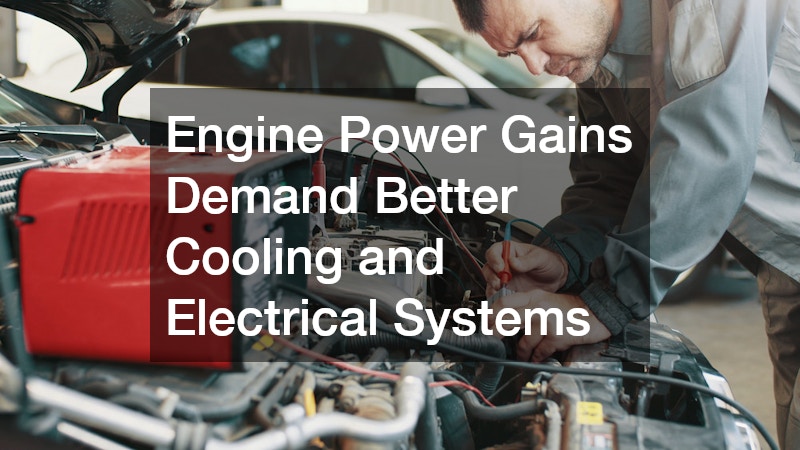
More horsepower sounds like a simple upgrade, but every extra unit of power your engine produces creates more heat and draws more electrical demand than the factory design ever accounted for. If you have added a turbocharger, supercharger, or performance tune, or you simply tow heavy loads often, your cooling and electrical systems are working harder than they were built to. Ignoring this reality leads to overheating, melted wiring, and expensive breakdowns at the worst possible time. This guide walks through the practical upgrades and maintenance checks that keep a higher-output engine reliable for years to come.
Why Extra Horsepower Increases Cooling System Demand
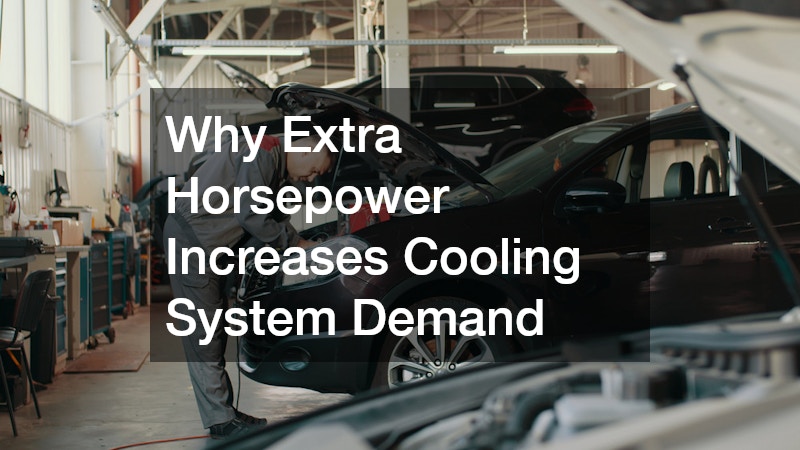 When an engine produces more power, it burns more fuel and air, and that combustion process generates significantly more heat than a stock engine ever produced. The factory radiator, water pump, and cooling fans were sized for the original power output, not for the added stress of a tune, turbo, or towing package. Once that margin disappears, coolant temperatures creep upward, and the engine starts running hotter on every drive, not just under hard acceleration.
Sustained high temperatures accelerate wear on gaskets, seals, and internal components, which is why so many modified vehicles end up needing more frequent auto repair visits than stock ones. A shop that understands performance builds can recommend a radiator upgrade, higher-capacity fan, or improved coolant flow before damage occurs rather than after.
Upgrading Radiators and Fans for Sustained Performance
A larger radiator core is often the first line of defense against heat soak, especially for vehicles that spend extended periods at high RPM or under sustained load. Aluminum radiators dissipate heat faster than the stock copper-brass units found in many older vehicles, and they weigh less too. Pairing a bigger radiator with a higher-flow water pump ensures coolant actually moves fast enough to carry heat away efficiently.
Electric fans with adjustable thresholds give you more control than factory clutch fans, kicking on earlier and running harder when sensors detect rising temperatures. This matters most in stop-and-go traffic or when idling after a hard run, since airflow through the grille drops to nearly nothing at low speeds.
- Upgraded aluminum radiators for better heat dissipation
- High-flow water pumps to match increased coolant demand
- Dual electric fans with adjustable temperature triggers
- Coolant overflow reservoirs sized for higher operating temperatures
- Regular flushes to prevent mineral buildup that reduces efficiency
How Alternators and Batteries Handle Added Electrical Load
Modern engines rely on electronic fuel injection, sensors, cooling fans, and control modules that all draw power continuously, and performance upgrades often add even more accessories to that list. A stock alternator may struggle to keep up once you add auxiliary fans, upgraded stereo equipment, or aftermarket gauges, leading to a slow battery drain that shows up as dimming lights or hard starts. Upgrading to a high-output alternator gives the entire electrical system breathing room, so nothing is left running on reserve power.
Battery selection matters just as much as the alternator itself, since a weak or mismatched battery cannot supply the surge current that high-demand components need. This is true for daily drivers and just as true for specialty vehicles, including golf cart battery replacement decisions, where upgraded electric motors or added lighting can push an aging battery pack past its limits. Choosing the right amp-hour rating and replacing batteries in matched sets prevents the uneven wear that shortens their lifespan.
Protecting Wiring Harnesses From Heat and Vibration
Higher underhood temperatures do not just threaten coolant and oil, they also degrade the insulation on wiring harnesses over time, especially wiring routed near exhaust components or turbochargers. Cracked or brittle insulation can cause shorts, intermittent electrical faults, and in worst cases, engine bay fires. Heat-resistant sleeving and properly routed harnesses away from hot components go a long way toward preventing these failures.
Vibration from added power also loosens connectors faster than most owners expect, particularly on vehicles that see frequent high-rpm operation or rough road surfaces. Periodic inspection of ground straps, fuse box connections, and relay sockets catches problems while they are still minor annoyances rather than roadside emergencies.
- Heat-resistant wire loom near exhaust and turbo components
- Dielectric grease on connectors to prevent corrosion
- Secured harness routing away from moving parts
- Regular checks of ground straps and fuse box connections
Transmission Cooling Needs for Higher Torque Applications
An engine that produces more torque puts additional strain on the transmission, and automatic transmissions in particular generate a lot of heat during that added workload. Transmission fluid that overheats breaks down faster, loses its lubricating properties, and can lead to slipping, hard shifts, or complete failure. Adding a dedicated transmission cooler is one of the most cost-effective ways to protect your investment in a higher-output engine.
Owners who skip this step often find themselves facing transmission repair sooner than expected, sometimes within the first year or two of running a performance tune or driving aggressively at higher power levels. A qualified shop can test fluid temperatures under load and recommend a cooler sized appropriately for your specific combination of power and use case.
Fleet and Work Truck Considerations for Power Upgrades
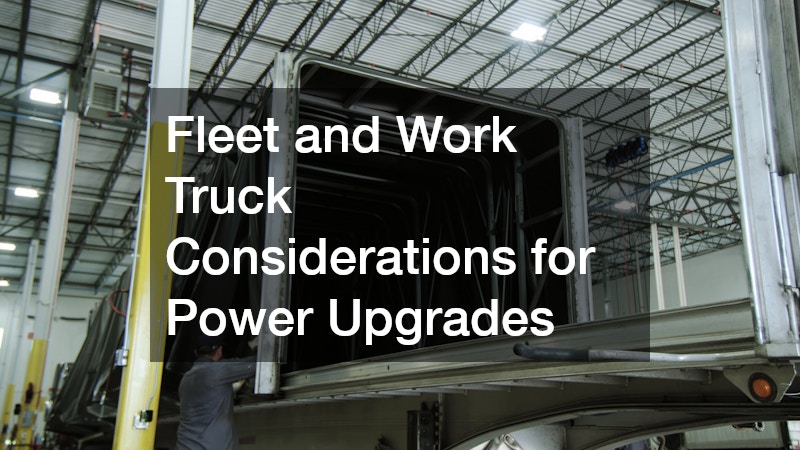
Businesses that rely on trucks for daily hauling often add power upgrades to handle heavier loads, but this multiplies cooling and electrical stress across every vehicle in the operation. Consistent fleet truck repair scheduling becomes essential once trucks are working harder than their original specifications intended, since small issues can cascade into costly downtime if ignored. Proactive fluid checks, cooling system inspections, and electrical audits keep a fleet running instead of sitting in a shop.
Many companies choose truck upfitting when they need auxiliary lighting, specialized equipment mounts, or reinforced electrical harnesses, and each addition puts more draw on the charging system. Planning electrical capacity during the upfitting process, rather than after problems appear, saves significant time and money down the road.
- Scheduled cooling system inspections across the fleet
- Load testing alternators and batteries under real work conditions
- Upfitting plans that account for added electrical draw
- Documentation of maintenance intervals for warranty and resale value
Heavy Hauling and the Strain on Cooling Systems
Heavy hauling adds a unique kind of stress that combines both mechanical load and reduced airflow, since a loaded vehicle forces the engine to work harder while often blocking some airflow to the radiator. A truck pulling a trailer near its rated capacity can see engine loads increase by 50 percent or more compared to unloaded driving, and a large trailer or camper in front of the grille disrupts the smooth airflow the cooling system was designed around. That combination means the radiator has to shed more heat while receiving less help from ambient air moving through it. Long grades and hot weather compound the problem, pushing coolant temperatures toward the danger zone faster than most drivers expect. A five-mile mountain grade at highway speed with a full load can raise coolant temperature by 15 to 20 degrees compared to flat-road towing, and doing that climb in 100-degree ambient heat leaves almost no thermal margin before the system hits its limit. Drivers who don’t watch their gauges in these conditions often only notice a problem once the temperature light comes on, by which point damage may already be underway. Transmission temperatures climb right alongside engine temperatures, which is why heavy-duty packages almost always include an upgraded cooling setup from the factory. Automatic transmission fluid that runs above 250 degrees Fahrenheit for extended periods can lose half its useful service life for every 20-degree increase beyond that threshold, making transmission cooling just as critical as engine cooling under load. That’s why factory tow packages typically bundle a larger radiator, a dedicated transmission cooler, and sometimes an auxiliary fan or oil cooler as a single system rather than treating each component in isolation.
If you find yourself dealing with overheating incidents more often when carrying heavy loads, towing trailers, or climbing sustained grades, it may be a sign that your cooling system is undersized for the demands you are actually placing on it. Factory cooling systems are typically engineered around average duty cycles, not the added thermal load of a fully loaded truck working in stop-and-go traffic or holding 70 mph up a mountain pass for twenty minutes at a time. Watch for warning signs beyond the temperature gauge creeping up: transmission fluid that smells burnt, coolant that needs frequent topping off, or a radiator fan that seems to run constantly even at idle. These are often early indicators that heat isn’t being dissipated fast enough, and continuing to push a marginal system invites warped heads, blown gaskets, or a cracked block down the line. Addressing the root cause with better radiators, coolers, and fans reduces the odds of engine damage and keeps performance consistent even under sustained heavy loads. A larger-core radiator with more fin density, an auxiliary transmission cooler, and a heavy-duty clutch or electric fan rated for higher CFM can each add meaningful thermal margin, especially when combined rather than applied individually. For anyone regularly hauling near a vehicle’s rated capacity, it’s worth matching cooling upgrades to actual towing weight and typical grade conditions rather than guessing. A cooling system sized for occasional light loads simply won’t hold up to daily heavy use, and the cost of an upgrade is minor compared to the cost of a replacement engine.
Electrical Accessories That Add to the Charging System Load

Performance builds rarely stop at the engine, and many owners add electronics that draw continuous power once the vehicle is running. A quality car stereo installation with amplifiers and subwoofers can pull significant current, especially at higher volumes, and this load adds up alongside auxiliary lighting, winches, and aftermarket gauges. Calculating total amperage draw before adding accessories helps avoid a charging system that is constantly playing catch-up.
Aftermarket window tint on vehicle glass is often mentioned alongside heat management, and while residential window tinting for homes works on the same principle of blocking solar heat, vehicle tinting can meaningfully reduce interior temperatures and lighten the air conditioning load on your electrical system. Less strain on the AC compressor means more alternator output available for other components, which matters more than people realize on heavily accessorized vehicles.
- Amplifiers and subwoofers add continuous current draw
- Auxiliary lighting and winches increase peak demand
- Window tinting reduces cabin heat and AC compressor load
- Calculating total amperage before adding new accessories
When Repair Costs Signal It Is Time to Sell
Sometimes a vehicle has been pushed past a reasonable point, with cooling and electrical problems stacking up faster than they can be reasonably fixed. If repeated overheating has warped a cylinder head or cooked a wiring harness beyond simple repair, the cost of restoring the vehicle can exceed its actual value. In these situations, getting a fair cash for cars offer and reinvesting in a vehicle better suited to your power goals is often the smarter financial move.
Before making that decision, get an honest assessment from a trusted mechanic who can separate cosmetic wear from structural or electrical damage that is not worth chasing. A clear-eyed evaluation prevents you from either giving up on a fixable vehicle too early or sinking more money into one that has reached the end of its useful life.
Glass and Visibility Considerations on Modified Vehicles

Cooling upgrades sometimes require reshaping engine bay components, adding hood vents, or changing airflow paths, and these modifications occasionally affect surrounding body panels or glass seals. Any time work near the windshield or body seams is involved, checking for stress cracks or seal damage protects against leaks and wind noise later on. Auto glass that has existing chips or cracks should be addressed before major engine work begins, since vibration from a more powerful engine can turn a small chip into a spreading crack.
Replacing damaged glass also gives you an opportunity to verify that sensor calibration for advanced driver assistance features remains accurate, since many modern windshields house cameras tied directly into the vehicle electrical system. Coordinating this work alongside your cooling and electrical upgrades keeps everything addressed in one visit rather than several separate trips.
A more powerful engine rewards you with better performance, but only if the supporting systems around it can keep pace with the added heat and electrical demand. Take stock of your cooling capacity, charging system, and wiring condition before problems force the issue, and address weak points proactively rather than reactively. Working with a shop experienced in performance builds ensures every upgrade works together instead of creating new bottlenecks elsewhere in the vehicle. Start with an honest inspection of your current setup, and build a upgrade plan that matches the power you are asking your engine to produce.
About the Author