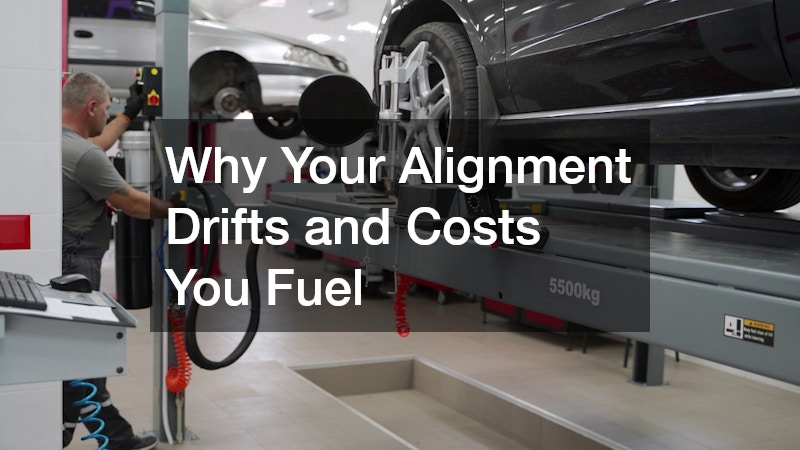
You notice your steering wheel pulling slightly to one side, or your tires wearing faster than they should, and it’s easy to write it off as a minor annoyance. But misaligned wheels quietly force your engine to work harder, your tires to drag against the road, and your fuel gauge to drop faster than it should. Understanding why alignment drifts in the first place is the first step to catching the problem before it drains your wallet. This guide breaks down the causes, warning signs, and fixes so you can make an informed decision about your vehicle’s care.
How Potholes and Curbs Knock Your Wheels Out of Position
Every time you hit a deep pothole, clip a curb while parking, or roll over a speed bump too fast, you send a jolt through your suspension and steering components. These impacts can shift the angles of your wheels just slightly, but even a small change in alignment adds up to real drag on your tires. Over months of daily driving, this cumulative wear is one of the most common reasons alignment drifts without any single dramatic incident causing it.
Roads with frequent freeze-thaw cycles are especially rough on alignment because pavement expands, cracks, and settles unevenly. If you live somewhere with harsh winters or poorly maintained streets, your alignment may need checking more often than the standard recommendation.
Why Worn Suspension Parts Let Your Wheels Wander
Your wheels aren’t just held on by bolts, they’re held in position by a network of parts designed to keep them steady through every bump and turn. Ball joints, tie rod ends, and control arm bushings all wear down over time, and once they get loose, your wheels can shift position even if nothing hit them. This is why steering can start to feel vague or unpredictable, because the underlying hardware is too worn to keep the wheels tracking the way they should.
- Tie rod ends control steering input and wear from constant turning
- Ball joints allow wheel movement and wear from weight and road shock
- Control arm bushings absorb vibration and dry out or crack with age
- Struts and shocks that sag can change ride height and handling stability
How Uneven Tire Wear Signals a Deeper Problem
One of the clearest visual clues that your wheels have drifted out of position is uneven wear across your tire tread. If the inside or outside edge of a tire wears faster than the center, or if you see feathering where the tread looks scalloped, your wheels are likely pointed in slightly the wrong direction. Left unaddressed, this uneven contact patch means less rubber is gripping the road efficiently, which forces your engine to work harder to maintain speed.
- Inner edge wear often points to excessive negative camber
- Outer edge wear can indicate positive camber or a toe angle problem
- Feathered or cupped tread suggests worn suspension bushings or struts
- Wear on only one tire may mean a bent wheel or damaged component
Why Misalignment Quietly Increases Your Fuel Costs
When your wheels aren’t pointed perfectly straight, your tires create additional rolling resistance as they drag slightly against the direction of travel instead of rolling freely. Your engine has to compensate for that resistance, burning more fuel to maintain the same speed you’d otherwise reach with less effort. Studies on rolling resistance suggest that this kind of directional drag can reduce fuel efficiency by several percentage points, which adds up significantly over a year of regular driving.
This hidden cost is easy to overlook because it doesn’t show up as a single repair bill, it shows up gradually at the pump. Many drivers only realize how much they were losing once the underlying issue gets corrected and notice their fuel economy improving within the following weeks.
How to Recognize the Early Warning Signs Behind the Wheel

Your car often tells you something is wrong well before a mechanic confirms it. Paying attention to how your vehicle feels on the road can help you catch trouble early, before it causes expensive tire damage or strains other components. If you also notice a new rattle or louder exhaust note during this time, it’s worth a stop at a muffler shop , since exhaust and undercarriage components can loosen from the same rough-road impacts that throw off your alignment.
- The steering wheel pulls to one side even on flat, straight roads
- Your steering wheel sits off-center when driving straight
- You feel vibration or looseness in the steering at higher speeds
- Tires squeal slightly on turns even at normal speeds
Why Regular Auto Repair Visits Catch Problems Early
Routine maintenance visits are one of the most reliable ways to catch small mechanical issues before they become bigger problems. A qualified auto repair technician can measure suspension angles and steering geometry precisely with specialized equipment and compare them against manufacturer specifications, something that’s impossible to judge accurately just by eye or feel. Scheduling this kind of auto repair checkup during routine service, like an oil change or tire rotation, means the inspection adds little extra time but can save you from months of uneven tire wear and wasted fuel.
Many drivers wait until they notice a problem, but proactive inspection is far cheaper than reactive repair. Catching a small mechanical shift early often costs a fraction of what you’d spend replacing prematurely worn components later.
When a Bad Alignment Points to Bigger Mechanical Trouble
Sometimes what feels like a minor handling quirk is actually a symptom of something more serious happening underneath your vehicle. A transmission that shifts roughly or hesitates can sometimes place uneven stress on drivetrain components, indirectly affecting how power reaches your wheels and how the car behaves on the road. In more severe cases, a shop may determine that a transmission replacement is necessary before other underlying issues can even be properly addressed, since a failing transmission can mask or worsen these symptoms.
This is why it’s worth having a full diagnostic rather than assuming every drivability issue is purely cosmetic or tire-related. A trustworthy technician will walk you through what they find and explain honestly whether you’re looking at a simple fix or a more involved repair like a transmission replacement.
Why Exhaust and Undercarriage Damage Can Mimic Alignment Issues
A dragging or rattling sound underneath your car doesn’t always mean your steering is off — sometimes it’s a sign of exhaust system damage instead. A loose or corroded muffler can shift position after hitting road debris, a pothole, or a speed bump taken too fast, creating vibration that feels similar to a steering or suspension problem. Heat shields and hangers can also crack or snap loose, letting the exhaust pipe swing and knock against the undercarriage as you drive.
These noises tend to change with engine speed rather than road speed, which is one clue that points away from alignment. A steering pull happens at any RPM, but an exhaust rattle often gets louder as you accelerate and quiets down when you coast. Vibration felt through the pedals or floor, rather than the steering wheel, is another sign the culprit may be underneath the car rather than in the wheels.
Getting muffler repair done promptly not only quiets your ride but also rules out one more possible source of the shaking or pulling sensation you might be blaming on your wheels. A qualified technician can inspect the exhaust hangers, clamps, and welds in under 30 minutes, often catching a $50 fix before it turns into a $300 replacement. Skipping this step means you could spend money on an alignment or new tires when the real issue was a rattling pipe all along.
If you’re unsure whether your symptoms point to a suspension issue or exhaust trouble, a closer inspection of the components underneath your car can help clarify the real cause. Exhaust parts run close to the suspension and steering components, so a hanging muffler or worn mount can rattle, sag, or scrape against nearby parts, producing noise and vibration that’s easy to mistake for a deeper mechanical problem.
A few telltale clues can help you tell the difference before you pay for a wheel alignment you may not need. Alignment problems typically show up as uneven tire wear, a steering wheel that’s off-center while driving straight, or the car pulling noticeably to one side. Exhaust and undercarriage issues, on the other hand, tend to produce rattling or buzzing that changes with engine RPM, a scraping sound over bumps or speed changes, or a distinct drop in exhaust noise pitch if a muffler has partially detached.
It’s also worth checking for physical clearance issues. A loose heat shield, a cracked exhaust hanger, or a sagging catalytic converter can all vibrate against the frame, control arms, or sway bar links, especially at highway speeds or when going over uneven pavement. These vibrations can transfer through the chassis and feel remarkably similar to the wheel shimmy or pull associated with misalignment.
Because these systems sit so close together, a visual inspection from underneath — or a quick check on a lift — is often the fastest way to rule out exhaust damage before assuming the problem lies in your suspension geometry. Catching a loose muffler bracket early can save you an unnecessary alignment appointment and point you toward a simpler, cheaper fix.
How Heavy-Duty and Diesel Vehicles Face Unique Alignment Challenges
If you drive a diesel truck, wheel tracking problems can be even more costly given the size of the tires and the weight the vehicle typically hauls. Heavier loads place additional strain on suspension components, and specialized diesel truck parts like reinforced tie rods or heavy-duty control arms often need replacing more frequently than standard passenger car parts. Because these trucks are frequently used for towing or hauling, even minor steering geometry shifts translate into a bigger fuel penalty due to the sheer size and weight involved.
Owners of trucks used for work purposes should pay particular attention to suspension inspections after towing heavy loads, since the added stress can accelerate wear on diesel truck parts that keep wheels tracking correctly.
What to Expect During a Professional Alignment Service
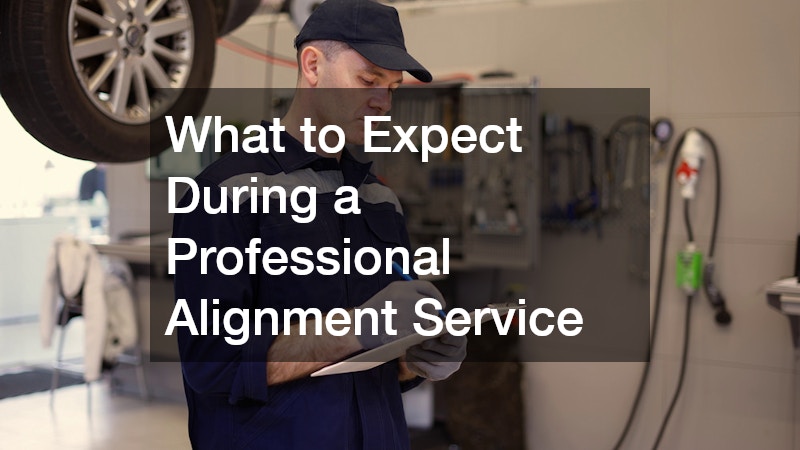
Understanding what actually happens during an alignment appointment can make the process feel less like a mystery and more like a routine part of vehicle ownership. The service typically starts with a visual inspection of tires, suspension components, and steering linkage, since worn ball joints or bushings can throw off results even after adjustments are made. From there, technicians drive the vehicle onto a lift equipped with sensors or cameras that clamp onto each wheel.
Using this computerized equipment, they measure camber, caster, and toe angles, comparing them against the exact specifications set by your vehicle’s manufacturer. Camber and caster relate to the tilt of the wheel, while toe measures whether the tires point slightly inward or outward — even a fraction of a degree off can translate into uneven tread wear or a car that pulls to one side. Most alignments take between 45 minutes and an hour, though vehicles with adjustable rear suspensions or aftermarket modifications may take longer.
Choosing a reputable Auto Repair Shop with updated equipment matters because older machines can miss small deviations that still affect fuel economy and tire wear over time. Ask whether the shop provides a printed before-and-after readout; a trustworthy auto repair provider will show you exactly how far off your angles were and confirm they’ve been corrected. This kind of transparency is one of the clearest signs you’re dealing with quality auto repair, rather than a quick, uninspected adjustment.
- Camber measures the inward or outward tilt of the tire when viewed from the front; uneven camber often points to worn suspension parts, not just a misalignment
- Caster affects steering stability and how the wheel pivots, influencing how easily your car returns to center after a turn
- Toe measures whether tires point slightly inward or outward relative to each other, and even a small toe error can cause noticeable tire feathering
- Technicians use computerized alignment machines with sensors clamped to each wheel for precise, real-time measurements
- Your vehicle is checked against manufacturer-specified angle ranges, since acceptable tolerances vary by make and model
- A full service typically takes under an hour for most passenger vehicles, though trucks or vehicles with worn parts may take longer
- You’ll usually receive a printed before-and-after report showing each angle’s measurement
Alignment drift rarely announces itself loudly, but its effects on fuel costs, tire life, and overall vehicle safety add up quickly if ignored. Paying attention to how your car feels on the road, scheduling regular inspections, and addressing related issues like worn suspension parts or exhaust damage can save you significant money over time. The next time you notice your steering pulling or your fuel costs creeping up, treat it as a signal worth investigating rather than a problem to put off.
About the Author