A sudden vehicular collision is one of the most jarring experiences a driver can encounter on the road. In the immediate aftermath, adrenaline spikes, confusion sets in, and critical decisions must be made in a matter of minutes. Beyond the initial shock, drivers face a daunting dual-track process: managing complex physical vehicle repairs while simultaneously navigating intricate legal and insurance procedures. Failing to handle either side correctly can lead to compromised vehicle safety, long-term mechanical issues, or significant financial loss due to unpaid medical bills and uncompensated property damage.
Taking a structured, methodical approach after a crash is essential to protecting both your physical well-being and your financial interests. Every choice—from how you document the crash scene to which repair facilities you trust—plays a direct role in the outcome of your insurance claim and your vehicle’s ultimate roadworthiness. This guide offers a complete roadmap through the essential mechanical, structural, and legal milestones every driver must navigate following an accident.
Immediate On-Scene Safety and Evidence Collection

The actions taken in the first thirty minutes following a collision establish the foundation for both your personal health and any subsequent legal claims. First and foremost, assess yourself and your passengers for injuries. If the vehicle is drivable and operating it does not pose an immediate hazard, move it out of active traffic lanes onto the shoulder or a nearby parking lot. Turn on your hazard lights immediately to warn approaching traffic. If the vehicle cannot be moved, remain inside with your seatbelt buckled if it is safe to do so, or move to a secure location behind highway guardrails.
Once physical safety is established, contact emergency services. A police presence is crucial, as an official law enforcement report provides an impartial record of the incident. While waiting for officers to arrive, begin systematically documenting the scene with your smartphone. Comprehensive evidence collection at the crash site is vital before vehicles are moved or physical marks are obscured by weather and traffic.
- Vehicle Placement and Scenery: Photograph all vehicles involved from multiple angles, capturing their exact resting positions, proximity to lane markings, and traffic control signals.
- Physical Roadway Evidence: Capture clear images of skid marks, shattered glass, scattered debris, road surface conditions, weather factors, and any obstructed sightlines or hidden traffic signs.
- Detailed Damage Documentation: Take close-up photos of all vehicle damage, as well as wide shots showing the entire vehicle to prove the context of impact points.
- Information Gathering: Exchange full names, contact phone numbers, driver’s license numbers, policy information, and vehicle identification numbers with all involved drivers.
- Witness Information: Secure names, email addresses, and phone numbers from neutral third-party witnesses before they leave the scene, as their testimony often carries substantial weight during fault disputes.
Avoid discussing fault, apologizing, or speculating about speed or braking distances with the other driver or bystanders. Keep your interactions limited to exchanging facts and assessing medical needs. Adrenaline can easily mask serious injuries, including soft tissue damage, internal bleeding, or concussions. Seeking prompt medical evaluation from an emergency room or urgent care clinic establishes a direct link between the collision and your physical injuries, which is critical for future claims.
Navigating Post-Crash Insurance and Legal Representation
Notifying insurance providers is a critical early step, but it must be handled with precision. Contact your own auto insurance provider as soon as possible to report the incident. Most policies contain clauses requiring prompt notification, regardless of who was at fault. When speaking with your claims adjuster, provide a strictly factual account of what occurred. Stick to facts you know directly, such as your direction of travel, weather conditions, and the basic sequence of events. Never guess or estimate parameters you are uncertain about, and refrain from stating that you are completely uninjured until you have undergone a thorough medical examination.
When dealing with the other driver’s insurer, remember that their primary goal is to minimize their financial payout. Adjusters may attempt to request recorded statements early in the process before the full scope of your vehicle damage or physical injuries is known. It is generally advisable to decline recording statements until you have consulted legal representation.
Navigating the aftermath of a major crash often requires professional guidance to ensure your rights are adequately protected. Retaining a qualified auto accident attorney ensures that you have an advocate dedicated to evaluating the full extent of your damages. Legal representation prevents insurance carriers from using delay tactics or pushing lowball settlement offers that fail to cover ongoing repair costs or future medical needs. Your legal team will manage all formal communications with the involved insurance companies, allowing you to focus on your recovery and vehicle repair process while protecting your financial interests.
Legal Strategies for Multi-Vehicle and Specialized Crashes
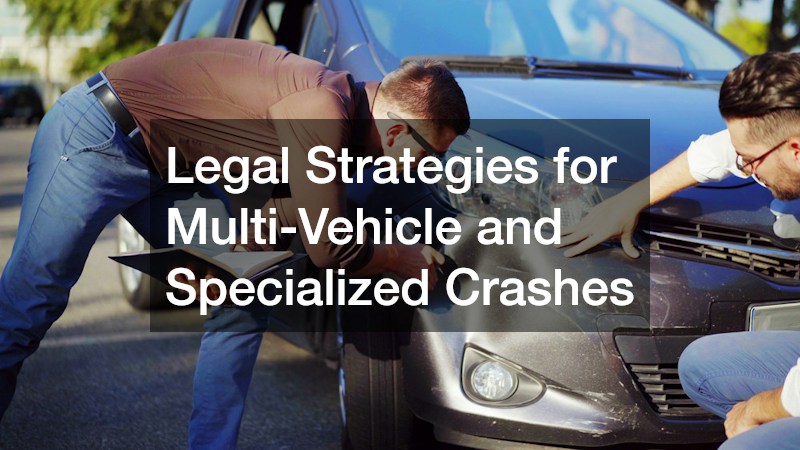
Not all vehicular collisions are straightforward two-car accidents. When a collision involves commercial semi-trucks or motorcycles, the legal and technical landscape changes dramatically due to the physical forces involved and specific regulatory frameworks.
Collisions involving heavy commercial vehicles present distinct legal challenges. Commercial trucks operate under strict federal and state motor carrier regulations governing driver rest hours, load weights, and routine fleet maintenance. Because these crashes often cause severe structural damage and complex, high-value liability disputes, seeking out an experienced truck accident attorney is essential. These cases require immediate legal interventions, such as issuing spoliation letters to preserve critical digital evidence like engine control module data, electronic logging device records, and driver dashcam footage.
Similarly, crashes involving two-wheeled vehicles demand specialized legal strategies. Motorcycle operators face unique vulnerabilities on the road, often sustaining catastrophic injuries even in low-speed collisions. Insurance adjusters frequently display unfair bias against riders, attempting to assign them partial or complete fault for an accident. Partnering with a skilled motorcycle accident attorney helps counter these biases effectively. A specialized lawyer can utilize expert crash reconstructionists to prove that the driver failed to yield, misjudged distance, or engaged in distracted driving, ensuring the injured rider receives fair compensation for both physical recovery and motorcycle replacement or repairs.
Structural and Mechanical Diagnostic Evaluations
While body panel dents and scraped paint are immediately obvious after a crash, the most dangerous damage often lurks beneath the surface. Modern vehicles are complex systems of interconnected mechanical components, sensitive electronics, and precise structural engineering. Impact forces travel through the vehicle frame, potentially damaging the engine, drivetrain, suspension, and safety systems without leaving obvious external clues.
Following any moderate or severe collision, scheduling comprehensive diagnostic testing through certified auto repair services is crucial. Mechanics use specialized computer scanning tools to read error codes from the vehicle’s onboard control modules. These scans reveal hidden issues such as misfiring electronic sensors, deployed or failing airbag modules, transmission fluid leaks, and compromised antilock braking hardware. A thorough mechanical inspection ensures that the vehicle is truly safe to drive rather than just cosmetically restored.
One frequently overlooked system during post-collision inspections is the vehicle’s underbody piping and emissions network. Impacts to the front or underside of a vehicle can fracture exhaust manifolds, dislodge catalytic converters, or crack heat shields. Contracting an expert auto exhaust repair technician ensures that these vital systems are properly restored. Neglecting exhaust damage can allow dangerous carbon monoxide fumes to seep into the passenger cabin, lead to failed state emissions tests, or cause severe engine backpressure issues that cripple long-term fuel efficiency and engine longevity.
Cosmetic Restorations and Precision Chassis Calibration
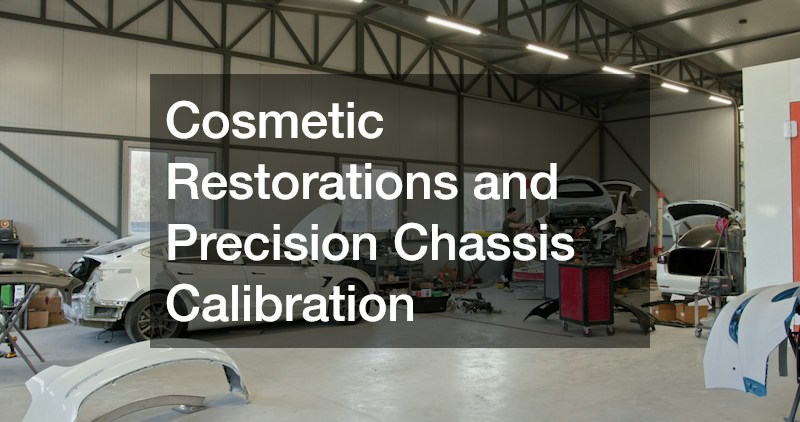
Restoring a vehicle to its pre-accident condition requires balancing high-precision structural realignments with detailed cosmetic bodywork. Even low-speed impacts can force a vehicle’s chassis or unibody frame out of its factory specifications, altering how energy is absorbed during future impacts and causing uneven stress on mechanical components.
When a vehicle suffers frame or suspension impacts, driving characteristics change immediately. You may notice the vehicle pulling toward one side, a crooked steering wheel during straight-line driving, or unusual vibration at highway speeds. Scheduling professional alignment services is mandatory following any suspension or wheel-area impact. Technicians use laser-guided alignment racks to measure laser-accurate camber, caster, and toe angles, adjusting the suspension components back to exact manufacturer specifications. Proper alignment prevents rapid, uneven tire wear and restores the precise steering response necessary for emergency evasive maneuvers.
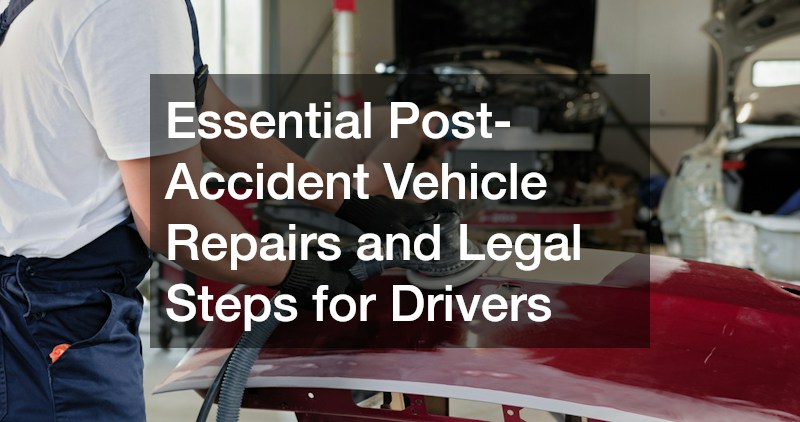
Simultaneously, exterior body panels must be repaired or replaced to protect the underlying structure from weather exposure and restore the vehicle’s appearance. Minor impacts, door dings, and soft creases where the paint remains intact can often be resolved through paintless auto dent repair techniques. This process uses specialized tools to gently massage bent metal back into its original shape from behind the panel. It preserves the original factory paint finish, reduces repair turnaround times, and significantly lowers overall labor costs compared to traditional body filling and repainting methods.
Managing Financial Recovery and Fault Disputes
Securing complete financial recovery for vehicle repairs, medical costs, and incidental expenses often involves overcoming significant resistance from insurance providers. Understanding how different insurance coverage types interact after a crash is vital to avoiding out-of-pocket losses.
When another driver is at fault for a collision, their automobile liability insurance serves as the primary source for funding your vehicle repairs and medical bills. Liability coverage is designed to compensate third parties for bodily injury and property damage caused by the policyholder’s negligence. However, third-party adjusters frequently attempt to dispute liability, claim your pre-existing vehicle damage was present before the crash, or delay payments in hopes you will accept a reduced settlement out of desperation.
If fault is contested or the at-fault driver is uninsured or underinsured, navigating the claim requires strategic action. Retaining experienced car accident attorneys provides the legal leverage necessary to challenge insurance denials effectively. A dedicated legal team can gather additional evidence, interview eyewitnesses, consult accident reconstruction experts, and present a compelling case to force fair compensation from stubborn insurers.
Final Inspection, Diminished Value, and Safe Vehicle Return
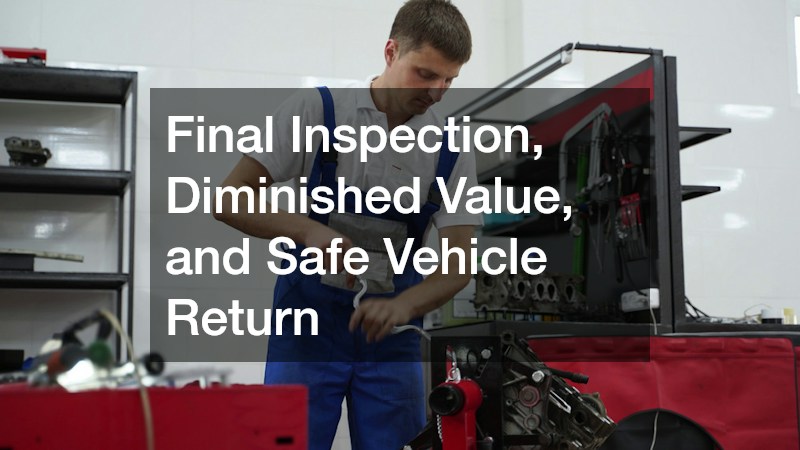
The repair process does not end when the body shop calls to inform you that your vehicle is ready for pickup. Before accepting your keys and signing off on the completion of work, conduct a thorough final inspection to ensure that all repairs meet safety and quality standards.
Begin with a detailed visual inspection of the vehicle in bright daylight. Inspect the paintwork closely for color match, overspray, or imperfections such as running paint or orange peel texture. Check all body panel gaps—around the hood, doors, trunk, and fenders—to ensure they are uniform and straight. Open and close every door, the hood, and the trunk lid to verify smooth operation without rubbing or catching. Turn on all exterior lights, turn signals, and emergency flashers, and inspect the dashboard for any illuminated warning lights or error codes.
Next, insist on taking the vehicle for a comprehensive test drive accompanied by a service manager if possible. Pay close attention to how the vehicle behaves under normal driving conditions:
- Steering and Handling: Ensure the vehicle tracks completely straight on a level road without pulling to either side and that the steering wheel is perfectly centered.
- Braking Performance: Test the brakes at various speeds to check for smooth, responsive stopping power without pedal pulsation, squealing, or pulling.
- Noise and Vibration: Listen carefully for unusual wind noise around windows, rattling interior trim panels, or clunking sounds from the suspension over bumps.
- Electronics and Climate Control: Test all interior electronics, including heating and air conditioning, infotainment screens, power windows, and advanced driver safety features.
Beyond physical repairs, drivers must also address the financial reality of diminished value. Even after a vehicle has been flawlessly repaired back to factory standards, its market value automatically decreases simply because it now has an accident history listed on vehicle history reports. Potential buyers and dealerships consistently pay less for a previously crashed vehicle compared to an identical model with a clean history.
Using This Guide for Auto Accidents
Navigating the aftermath of a vehicle collision requires a balanced approach that gives equal weight to physical mechanical repairs and strategic legal protections. By prioritizing immediate scene safety, collecting meticulous evidence, and seeking prompt medical attention, you establish a solid foundation for all future recovery steps. Working with qualified repair specialists ensures that your vehicle is structurally sound, mechanically reliable, and safe for your family, while experienced legal counsel protects your rights against unfair insurance practices and disputed liability claims.
About the Author