Modern vehicles are packed with sensors, cameras, and computers that once belonged only in science fiction, and while this technology makes driving safer, it has quietly changed what happens when something goes wrong. A cracked windshield or a worn brake pad no longer means a simple fix, because these components are now tied into complex electronic systems that require recalibration and specialized diagnostics. If you own a newer car, understanding how connected technology affects repair costs can help you budget wisely and avoid surprises at the shop. This guide breaks down exactly where the changes are happening and what you can do to stay ahead of them.
Sensor-Loaded Braking Systems and Rising Service Costs
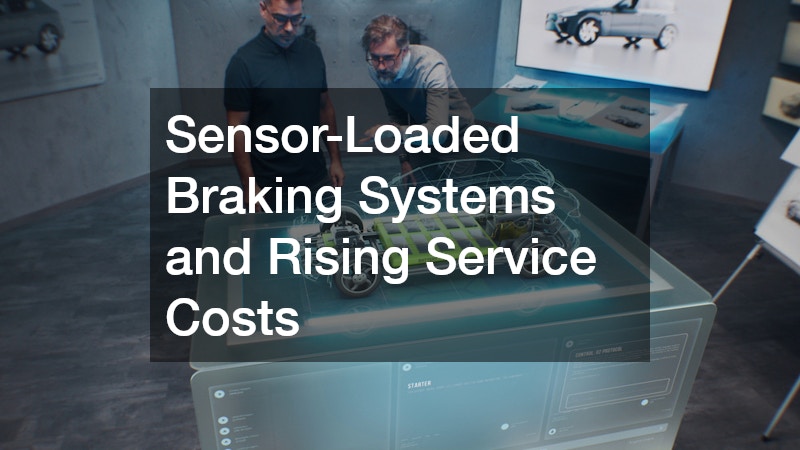
Braking systems used to be purely mechanical, but today they are woven into a network of sensors that monitor wheel speed, brake pad thickness, hydraulic pressure, and even distance to nearby objects through radar or camera arrays. This means routine brake repair now often involves more than swapping pads and rotors, since technicians must also check that anti-lock braking, stability control, and collision-avoidance sensors are communicating correctly with the vehicle’s central computer. A misaligned or dirty sensor can trigger dashboard warnings even after a proper mechanical fix, leading to additional diagnostic time billed at shop rates. Recalibrating a forward-facing camera after a brake job, for example, often requires specialized targets and software that many independent shops don’t own, pushing customers toward dealership service bays. Costs add up quickly once electronics enter the picture. A basic pad-and-rotor job that once cost $150 to $250 can now climb past $400 or $500 when sensor recalibration, wheel-speed sensor replacement, or software resets are required. Shops also face pressure to invest in scan tools and training just to diagnose problems accurately, and those overhead costs inevitably get passed along to drivers.
Modern brake systems now integrate wheel speed sensors, brake pad wear sensors, and electronic parking brake modules that communicate directly with the vehicle’s central computer. Because of this added complexity, shops increasingly need specialized scan tools—often costing dealerships and independent shops several thousand dollars per brand—to reset brake modules and recalibrate sensors after even routine pad or rotor replacements. A simple brake job that once took under an hour can now require an additional 20 to 30 minutes of diagnostic work just to clear fault codes and confirm the system reads correctly. This calibration step isn’t optional on many newer vehicles; skipping it can trigger dashboard warning lights or, worse, cause the electronic parking brake or anti-lock system to malfunction. Car owners comparing repair quotes should specifically ask whether sensor calibration is included in the estimate, since it is easy for this cost—typically ranging from $50 to $150 depending on the vehicle—to be tacked on separately later. It’s also worth asking whether the shop has the correct software subscription for your specific make, since outdated or generic scan tools sometimes fail to complete the reset properly, leading to repeat visits.
- Ask if brake repair pricing includes electronic sensor recalibration, since ADAS-linked brake sensors often need this after pad or rotor replacement
- Request a printout of diagnostic codes before and after service to confirm the actual fault was resolved, not just cleared
- Confirm whether your car’s brake system requires software updates, especially after installing aftermarket parts
- Ask whether recalibration requires a dealer-level scan tool or can be done with standard shop equipment, as this affects both cost and turnaround time
- Keep service records to track sensor-related issues over time, noting recurring codes that might signal a wiring or module problem
- Compare quotes from at least two shops, since sensor recalibration fees can vary by $50 to $150 depending on the vehicle brand
Emissions Sensors and the Rising Cost of Exhaust System Repairs
The catalytic converter has always been an expensive part to replace, but connected vehicles have added a new layer of complexity through oxygen sensors and onboard diagnostics that constantly monitor emissions performance. When a converter fails, it frequently triggers a cascade of error codes that can make diagnosis confusing without proper equipment. This is part of why catalytic converter replacement costs have climbed, since labor now includes verifying that every linked sensor reports correctly afterward.
Theft of catalytic converters has also risen because the metals inside them are valuable, and replacing a stolen unit on a connected vehicle means reprogramming the car’s emissions computer to recognize the new part. Owners should be aware that a cheap aftermarket converter might not communicate properly with factory sensors, leading to repeat visits and wasted money.
- Choose OEM or certified parts to avoid sensor compatibility issues
- Ask your shop if converter replacement includes computer reprogramming
- Consider a protective shield if theft is common in your area
- Watch for check engine lights that reappear after a repair
Windshield Cameras and the New Cost of Glass Damage

A cracked windshield used to be a same-day fix at a strip-mall glass shop, but that simplicity is disappearing fast. Many vehicles now have forward-facing cameras, rain sensors, and even humidity sensors mounted directly to the glass, all feeding data to advanced driver assistance systems (ADAS). Replace that glass without accounting for the hardware attached to it, and you’re no longer just swapping out a windshield. This means auto glass repairs on newer cars often require a static or dynamic recalibration of lane departure warnings, automatic emergency braking, and adaptive cruise control after installation. Static calibration involves parking the vehicle in a controlled environment with special targets placed at exact distances, while dynamic calibration requires driving the car at specific speeds so the system can relearn its surroundings. Some vehicles need both, adding an hour or more of labor and specialized equipment that many independent shops simply don’t have. Skipping this step can leave safety systems misaligned, which is a risk most drivers do not realize until a warning light appears weeks later, or worse, until the camera misjudges distance during an actual emergency stop. Recalibration costs can add anywhere from $150 to $500 on top of the glass itself, turning what was once a $250 repair into a $700 job. Insurers are still catching up to this reality, and drivers who assume glass coverage means full coverage are often surprised by what’s left on the bill.
Recalibration can be done statically in a shop bay using targets and charts positioned at precise distances from the vehicle, or dynamically by driving the car under specific conditions—often on well-marked roads at a certain speed for 15 to 20 minutes—so the camera can relearn its surroundings. Some vehicles require both methods to satisfy manufacturer specifications, which stretches a same-day glass job into a multi-hour or even multi-day appointment. Either way, what used to be a simple glass swap now involves specialized equipment, trained technicians, and calibration software licenses that not every shop carries in-house. That added complexity shows up directly on the invoice. Calibration alone can run anywhere from $150 to $500 depending on the make and model, on top of the $300 to $900 many drivers already pay for an ADAS-equipped windshield itself. Shops without the right equipment may need to sublet the calibration to a dealership or specialty center, adding a delay and a markup to the final bill. Getting an accurate quote means asking upfront whether calibration is bundled into the price or billed as an extra step, and whether it will be done in-house or outsourced. It’s also worth confirming which calibration type the vehicle requires, since dynamic recalibration can be delayed by bad weather or poor lane markings, pushing the repair timeline out further than a simple glass replacement ever would.
- Confirm whether your car requires static calibration (using targets in a controlled shop setting), dynamic calibration (a test drive with the ADAS system reading road markings), or both
- Ask if the glass shop is certified to work with your camera system — look for OEM certification or I-CAR credentials, since generic “glass replacement” experience isn’t the same as ADAS calibration training
- Request documentation showing calibration was completed, including pre- and post-scan reports and pass/fail results, not just a verbal confirmation
- Check whether the replacement glass is OEM or high-quality OEM-equivalent, since cheaper aftermarket glass can distort camera clarity and cause calibration to fail repeatedly
- Avoid driving with a cracked windshield near camera housings, since even hairline cracks can throw off sensor alignment and trigger false ADAS warnings
- Budget for the calibration fee separately from the glass itself — this step alone can add $150 to $500 to a repair that once cost a couple hundred dollars total
Tinting Choices That Affect Sensor Performance
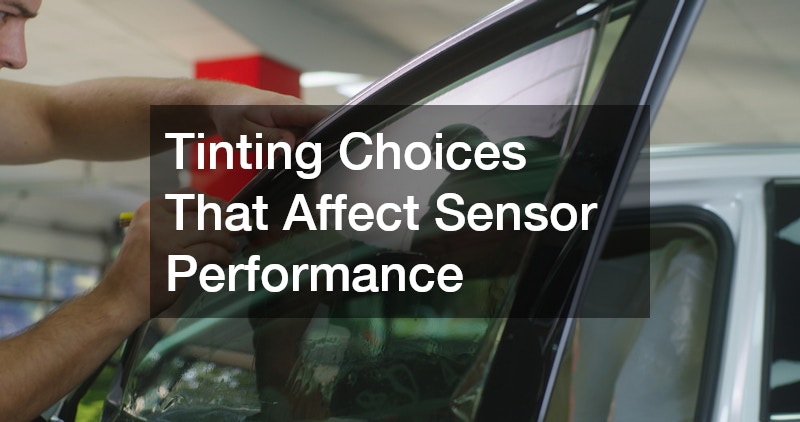
Adding tint to windows is a popular way to reduce glare and protect interiors, but connected vehicles introduce a wrinkle that many owners overlook. Some window tinting services now have to work around sensors embedded near the windshield or rear window, since certain films can interfere with signal transmission for cameras, toll sensors, or rain detectors. Choosing the wrong film can create static or blind spots for systems designed to keep you safe.
Reputable installers will know which tint percentages and materials are compatible with your car’s electronics, and they will avoid covering sensor zones entirely. It is worth spending a little more time researching a shop’s experience with newer vehicles before committing to a full tint job.
- Ask if the installer has experience with sensor-equipped vehicles
- Request tint that avoids sensor and camera zones
- Check state laws on tint percentage before scheduling installation
- Confirm warranty coverage in case of bubbling or peeling
Roadside Breakdowns and Choosing the Right Recovery Option
When a connected car breaks down, the diagnostics inside it can actually help a towing service figure out the problem before the vehicle even arrives at the shop. Many roadside providers now use apps that pull basic error codes remotely, which speeds up dispatch and helps match you with a truck equipped to handle your specific issue. This is especially useful for electric or hybrid vehicles, which often need specialized flatbed transport rather than a standard hook and chain.
Knowing your vehicle’s needs ahead of time can save money and stress during a breakdown. A quick call to confirm equipment type before the truck arrives prevents wasted trips and additional fees.
- Confirm flatbed availability for electric or all-wheel-drive vehicles
- Ask if the provider can read basic diagnostic codes remotely
- Keep your roadside assistance membership information handy
- Note your exact location details to speed up response time
Large Vehicle Recovery and the Added Weight of Technology
Commercial trucks and larger personal vehicles bring their own challenges when they break down, since connected systems in these vehicles are often tied to cargo sensors, engine diagnostics, and safety monitoring equipment. Heavy duty semi truck towing requires specialized equipment not just because of size and weight, but because technicians must avoid disrupting sensitive electronic systems during recovery. A rushed or improper tow can damage wiring harnses or sensor housings that are expensive to replace.
Fleet owners in particular should work with providers who understand these vehicles’ technology stack, since even a short delay caused by improper handling can lead to costly downtime. Choosing an experienced provider upfront is far cheaper than dealing with secondary damage later.
- Verify the provider has experience with large commercial vehicles
- Ask about protocols for protecting onboard electronics during recovery
- Confirm insurance coverage for cargo and equipment during transport
- Request an estimated time of arrival for time-sensitive shipments
Immobilizer Systems and Modern Tow Truck Response
Many newer vehicles come with electronic immobilizers and parking systems that can interfere with a standard tow if not properly disengaged first. A qualified tow truck service will know how to put a vehicle into neutral or release an electronic parking brake without triggering alarms or damaging the drivetrain. This is a step that inexperienced operators sometimes miss, leading to avoidable repair bills after the vehicle reaches its destination.
Before towing, it helps to know your car’s specific requirements, especially if you drive a hybrid or electric model with unique power systems. Asking the dispatcher a few questions in advance can prevent unnecessary complications.
- Ask whether your vehicle needs neutral tow mode activated
- Confirm the operator is trained on electronic parking brake release
- Keep your owner’s manual accessible for quick reference
- Verify the truck’s weight rating matches your vehicle’s specifications
Interior Sensors and the Importance of Regular Cleaning
It is easy to forget that dirt and grime can affect more than just appearance, especially in cars with interior cameras, humidity sensors, or touch-sensitive controls. Routine car wash and detailing appointments help keep sensor housings clear of buildup that could interfere with readings, particularly around dashboards, mirrors, and door panels. Neglecting this can sometimes cause false alerts or reduced sensor accuracy over time.
Detailing services that understand today’s vehicles will take extra care around exposed sensor areas rather than blasting them with high-pressure water or harsh chemicals. Choosing a shop that knows how to work around this technology protects your investment and keeps warranty coverage intact.
- Ask detailers to avoid high-pressure water near sensor housings
- Request gentle cleaning products for touch-sensitive interior surfaces
- Schedule regular cleanings to prevent buildup around cameras
- Mention any known sensor issues before service begins
Specialty Builds and Material Choices That Support Vehicle Electronics
For those who customize trucks, boats, or trailers connected to their vehicles, material choices matter more than people expect. Marine lumber is often used in custom flatbeds, docks, and boat structures because it resists rot and weather damage, but when these builds are paired with electronic monitoring systems, proper installation becomes even more important. Poorly sealed wiring near treated wood can lead to corrosion or moisture damage over time.
Anyone building custom equipment that interacts with a vehicle’s electrical system should consult professionals familiar with both marine-grade materials and modern wiring standards. This reduces the risk of costly repairs down the road caused by hidden water damage or short circuits.
- Seal all wiring connections near treated wood structures
- Choose marine grade materials rated for long-term moisture exposure
- Inspect custom builds regularly for signs of corrosion
- Work with installers familiar with both materials and electronics
Transportation Alternatives While Your Vehicle Is in the Shop
Extended repair times are becoming more common as shops wait on specialized parts or calibration equipment for connected vehicles. This has led many owners to explore alternative transportation options, including ride shares, rentals, or even a Limo Service for special occasions that cannot be postponed. Planning ahead for these gaps can reduce stress significantly if your vehicle needs an extended stay at the shop.
It helps to ask your repair shop for a realistic timeline upfront so you can arrange alternate transportation before you are left scrambling. Being proactive here saves both time and money in the long run.
- Ask for a written repair timeline before dropping off your vehicle
- Research rental options that fit your daily commute needs
- Keep a backup transportation plan for unexpected delays
- Confirm whether your insurance covers rental reimbursement
Connected car technology has undeniably changed the landscape of vehicle repair, adding new steps, tools, and considerations to services that once seemed routine. While this can mean higher costs in certain situations, understanding where and why those costs appear puts you in a much stronger position to make smart decisions. Take time to ask detailed questions before any repair, keep documentation of past services, and choose shops with proven experience in modern vehicle systems. With a little preparation, you can manage these costs confidently rather than being caught off guard.
About the Author