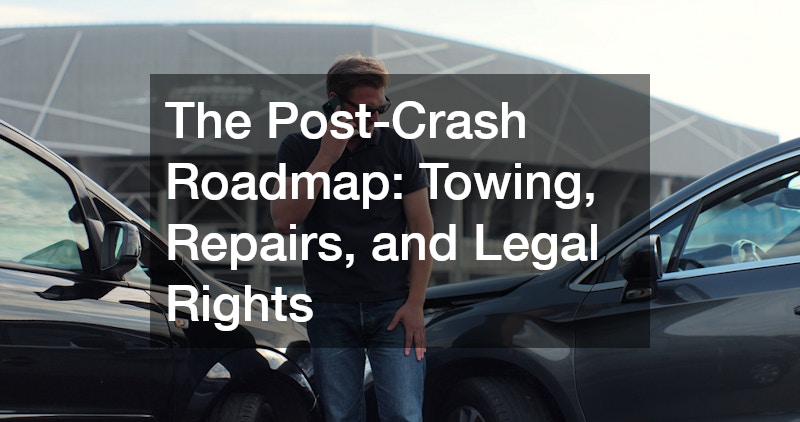
The moments immediately following a vehicular crash are dominated by adrenaline and confusion. However, the actions taken in the first thirty minutes after an impact set the foundation for safety, insurance processing, and vehicle recovery. Drivers should first check themselves and their passengers for injuries before assessing the surroundings. If the vehicle is positioned in an active traffic lane and remains operable, moving it safely to the shoulder prevents secondary impacts. Turning on hazard lights and placing reflective flares or warning triangles alerts oncoming traffic, creating a safer perimeter for everyone involved on busy roadways.
Once initial safety is established, calling emergency services is paramount. Police officers document the scene, gather witness statements, and create an official accident report that serves as a neutral record for insurance providers. While waiting for law enforcement, drivers should use their smartphones to take comprehensive photographs of the scene. These images ought to capture vehicle positions, skid marks, road conditions, weather, traffic signs, street names, and all visible vehicle damage from multiple angles.
Evaluating the drivability of the car requires careful observation. Even if an engine turns over, hidden fluid leaks, bent suspension arms, or tire rubbing can make driving extremely dangerous. Attempting to drive a compromised vehicle often causes severe secondary damage to internal components or causes a secondary crash. When a car exhibits leaking radiator fluid, misaligned wheels, or severe body contact with tires, arranging for professional towing becomes necessary to transport the vehicle safely away from the scene without causing further harm.
In addition to physical evidence, exchanging basic information with all involved drivers is critical. Collect names, phone numbers, driver’s license numbers, insurance policy details, and vehicle license plate numbers. Refrain from discussing fault or making casual apologies, as these statements can be misconstrued during insurance reviews. Maintaining a calm, objective demeanor ensures that accurate details are recorded without adding emotional bias to the official record.
Navigating Vehicle Transport and Storage Options
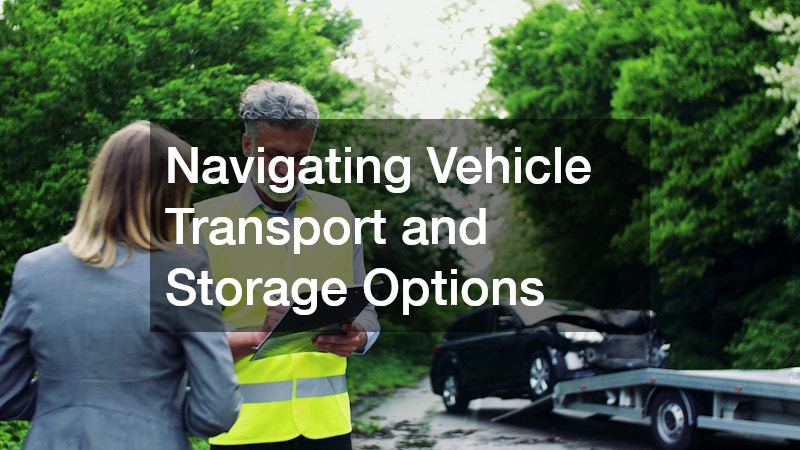
When a vehicle cannot be driven safely from the scene, selecting the right transport option becomes the next critical step. Many municipal law enforcement agencies will automatically summon a contract operator if the driver does not express a preference. However, drivers usually retain the legal right to choose which vendor transports their vehicle, provided the operator can arrive within a reasonable timeframe set by the police officer.
Understanding how local dispatch works can save vehicle owners hundreds of dollars in unexpected fees. Emergency roadside transport services vary wildly in pricing structure, hook-up fees, gate fees, and per-mile charges. Some storage yards charge substantial daily fees if the vehicle sits in their impound lot overnight or over a holiday weekend. Requesting an itemized breakdown before signing any authorization or release form ensures transparency and prevents unexpected charges from accumulating while insurance claims are being processed.
It is also essential to specify the vehicle’s final destination before transport begins. Having the automobile delivered directly to a trusted repair facility eliminates the need for secondary transport fees down the road. If the incident occurs outside normal business hours, the operator may need to store the car temporarily in a secure yard. In these situations, vehicle owners should clear out personal belongings, registration documents, financial cards, and valuable items immediately. Choosing reputable tow services helps guarantee that the vehicle is handled with proper equipment, such as flatbed haulers, which protect all-wheel-drive systems and lower body panels from incurring additional damage during transport.
Furthermore, drivers should double-check their existing automobile insurance coverage or roadside assistance memberships. Many policyholders carry towing coverage without realizing it, which can cover dispatch fees directly or reimburse out-of-pocket costs. Keeping detailed receipts and documentation from the transport provider will streamline the reimbursement process when filing the initial insurance claim.
Understanding Structural and Frame Collision Assessment
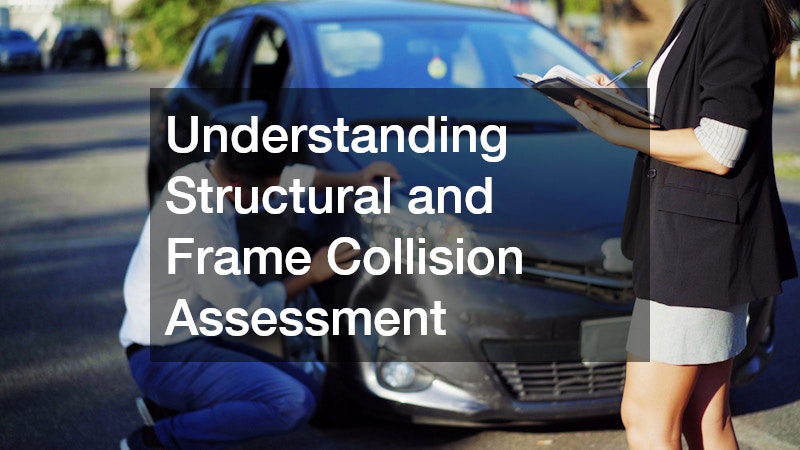
Modern automobiles are engineered with sophisticated safety structures designed to absorb and redistribute impact energy away from the passenger cabin. Crumple zones in the front and rear quarters deform deliberately during an impact, preserving the rigid safety cage surrounding the occupants. However, this engineering feature means that even seemingly minor collisions can cause subtle structural shifts in the vehicle’s underlying frame or unibody architecture.
When assessing structural damage, visual inspection alone is rarely sufficient. A vehicle may appear cosmetically sound on the outside while harboring compromised frame rails, misaligned bumper towers, or warped floor pans underneath. Advanced structural measurement systems use laser imaging and computerized ultrasound to compare the vehicle’s current dimensions against factory specifications down to the millimeter. Correcting these shifts requires specialized hydraulic frame-straightening equipment to pull components back into precise alignment.
Failing to address structural distortion compromises the vehicle’s future safety profile. A frame that has been bent and improperly straightened will not absorb energy correctly in a subsequent collision, increasing the risk of injury to occupants. Additionally, frame misalignment causes uneven tire wear, steering pull, and premature failure of suspension linkages. Following an auto body collision, getting a thorough structural scan guarantees that hidden frame issues are identified early, ensuring the vehicle retains its crashworthiness and structural integrity before cosmetic repairs begin.
Insurance adjusters work closely with technicians to determine whether structural repairs are economically feasible. If the cost of restoring the frame and safety structures exceeds a specific percentage of the vehicle’s actual cash value, the insurance company may declare the vehicle a total loss. Understanding this evaluation process helps owners navigate total loss settlements effectively and make practical decisions regarding vehicle repair versus replacement options.
Comprehensive Mechanical Diagnostics and System Analysis
Beyond structural frames and external body panels, crashes frequently cause significant damage to underlying mechanical systems. Impact forces ripple through the engine bay, disturbing cooling lines, air conditioning condensers, power steering racks, exhaust hangers, and transmission mounts. Liquid leaks, such as bright green or orange coolant, red transmission fluid, or clear power steering fluid, signal immediate mechanical trouble that requires expert evaluation.
Electrical systems are equally vulnerable during a collision. Wiring harnesses can be pinched or severed, leading to short circuits, drained batteries, or malfunctioning electronic control modules. Modern vehicles rely heavily on complex networks of sensors for engine management, anti-lock braking systems, blind-spot monitoring, and electronic stability control. When these systems suffer physical or electrical disruption, warning lights illuminate the instrument cluster, signaling that internal diagnostic checks must be conducted.
A qualified auto mechanic should perform a complete engine and drivetrain evaluation before the vehicle is deemed roadworthy. This assessment includes pressure-testing the cooling system, checking wheel alignment angles, inspecting brake lines for micro-fractures, verifying steering responsiveness, and scanning internal computers for diagnostic trouble codes. Neglecting these checks can lead to sudden engine overheating, transmission slipping, or complete mechanical failure while driving on the highway.
Understanding the full scope of mechanical damage prevents unexpected breakdown risks down the road. Obtaining a comprehensive written report allows owners to authorize necessary car repair procedures that address mechanical integrity alongside external appearance. Taking a systematic approach to both mechanical and structural repairs guarantees that the vehicle operates smoothly, safely, and efficiently for miles to come.
Selecting the Right Facility for Body and Mechanical Repairs
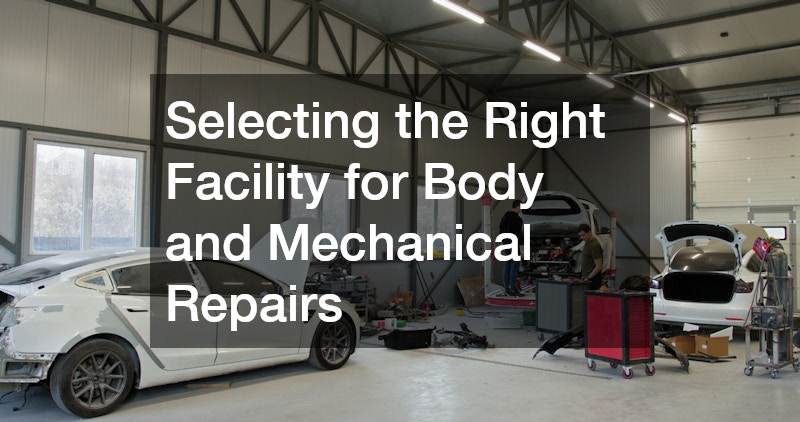
Choosing where to send a damaged vehicle is one of the most critical decisions an owner makes following an accident. Insurance companies often suggest specific preferred or network facilities, known as Direct Repair Programs. While network facilities offer convenient billing and streamlined communication with adjusters, vehicle owners are legally entitled to select any licensed repair facility they prefer without penalty.
Selecting an independent auto body shop gives vehicle owners complete control over who performs the work and what standards are applied during restoration. Independent facilities prioritize the customer’s best interests, ensuring that factory repair guidelines are followed without cutting corners to meet insurer-imposed cost caps. When evaluating potential repair facilities, owners should look for industry certifications such as Inter-Industry Conference on Auto Collision Repair Gold Class designation or Automotive Service Excellence credentials. These standards reflect continuous technician training in current metallurgy, structural bonding, and advanced vehicle technologies.
It is important to understand the distinction between facilities that handle cosmetic restoration and those that focus on general engine maintenance. While a standard auto repair shop excels at brake jobs, routine maintenance, and engine diagnostics, specialized collision facilities possess the heavy machinery, paint booths, and frame racks necessary to restore crushed sheet metal and structural frames. Visiting a facility equipped for both collision work and complex mechanical systems ensures a streamlined, seamless restoration process from start to finish, backed by comprehensive warranties.
Material Selection, Component Sourcing, and Glass Safety
The quality of components used during collision restoration plays a major role in vehicle safety, aesthetics, durability, and resale value. Repair estimates typically categorize replacement items into three primary categories: Original Equipment Manufacturer, aftermarket, and reconditioned or recycled parts. Original components are manufactured by the vehicle’s original producer, guaranteeing exact fitment, factory finish, and identical structural performance in future impacts.
Insurance adjusters frequently write estimates based on aftermarket or recycled components to lower total claim payouts. While high-quality aftermarket components can offer cost savings, lower-tier parts may fit improperly, display uneven panel gaps, or corrode prematurely over time. Requesting original equipment manufacturer auto parts during the estimate phase helps maintain the structural integrity and original factory specifications of the vehicle, particularly for critical crash-energy components like bumper reinforcement bars, door impact beams, and crumple-zone brackets.
Vehicle safety extends beyond metal panels to include all glass surfaces, especially the windshield. Modern windshields act as a key structural component, providing up to thirty percent of the cabin’s structural strength during a rollover incident and supporting passenger airbag deployment. If an impact creates deep cracks, spiderweb fractures, or damage within the driver’s direct line of sight, a complete windshield replacement becomes necessary. Furthermore, because contemporary vehicles feature Advanced Driver Assistance Systems–such as lane-keeping assist, forward collision warning, and automatic emergency braking–embedded behind the glass, replacement requires precise camera calibration to ensure safety sensors function accurately.
Protecting Legal Rights and Managing Insurance Claims
Navigating the administrative and legal aspects of an accident can feel as challenging as managing physical vehicle repairs. Insurance adjusters are trained to minimize payout costs for their employers, which can lead to initial settlement offers that underfund full vehicle repairs or fail to account for medical bills and lost wages. Policyholders must remember that an adjuster’s early estimate is often an opening negotiation rather than a final, non-negotiable verdict.
Documenting every interaction, phone call, receipt, and estimate establishes a strong paper trail to support the claim. If the driver or passengers suffered injuries, seeking prompt medical attention is crucial, both for personal health recovery and to establish medical records linked directly to the crash. In cases where fault is disputed, injuries are severe, or insurance companies delay processing legitimate claims, consulting an experienced car accident attorney provides crucial legal advocacy. A legal professional reviews policy language, negotiates directly with insurance adjusters, gathers expert witness testimony, and protects the victim from signing liability waivers prematurely.
Another legal and financial aspect to consider is diminished value. Even after a vehicle is perfectly restored to its pre-crash physical state, its market value often decreases simply because it now has a reported accident history. In many jurisdictions, vehicle owners have the legal right to file a diminished value claim against the at-fault driver’s insurance carrier to recover this lost equity. Having detailed repair records, official appraisals, and legal support ensures that car owners receive fair compensation for all financial losses.
Establishing a Smooth Path to Vehicle Recovery
Recovering from a vehicle crash requires patience, organization, and informed decision-making across multiple stages. By taking proactive measures at the accident scene, selecting certified repair experts, insisting on quality components, and asserting legal rights, vehicle owners can successfully manage the entire recovery process. Knowing what steps to take transforms a stressful event into a manageable sequence of clear, practical actions that safeguard both personal investment and physical well-being.
Maintaining open communication with both the repair facility and insurance representatives prevents unnecessary delays and clears up misunderstandings early. Regularly requesting progress updates and reviewing detailed repair invoices ensures that all work aligns with original estimates and factory safety protocols. Once all structural, mechanical, and aesthetic work is completed, conducting a thorough final inspection–including a hands-on test drive to check alignment and dashboard indicators–provides complete peace of mind before accepting the vehicle back onto the road.
About the Author